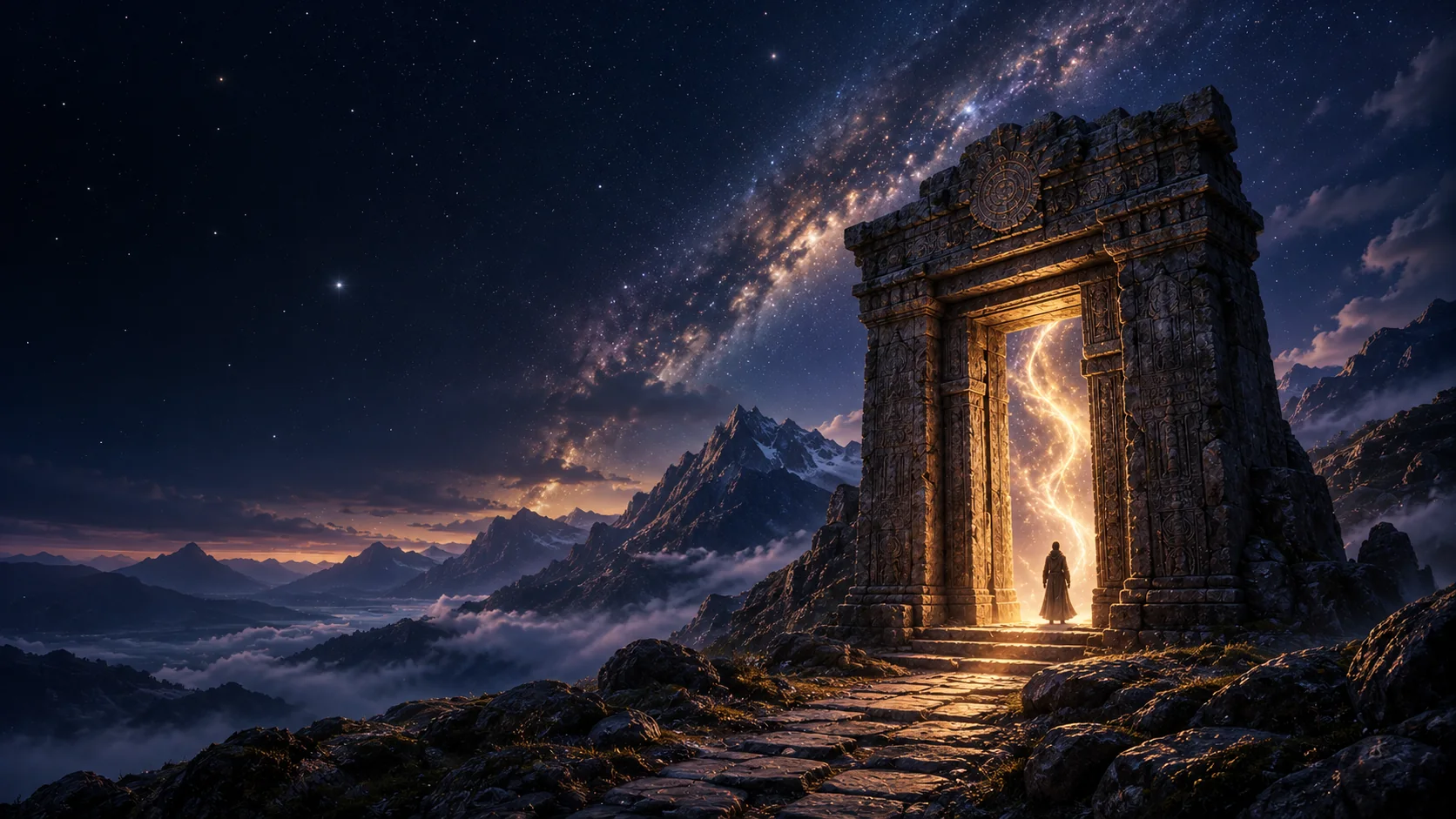
First, there is light.
Jyoti means light. Before a chart can be read, someone has to look up.
The moving lights of the sky give us a way to observe time. From that simple act of watching comes a human question: what is changing in my life, and what is asking for my attention?

What is seen becomes a story.
One person describes the sky. Another listens and remembers.
Jyotish lives in this passage from observation to conversation. Knowledge is carried through voices, questions, teachers and students, before it finally settles into a written method.

Then the story meets the page.
A lamp, a manuscript, a careful line of calculation.
What was watched and spoken becomes something that can be studied. The page does not replace the sky; it gives the reader a way to return to it, to compare patterns and pass the knowledge onward.

The sky has its own coordinates.
Jyotish commonly uses the sidereal zodiac, reading the relationships between the lagna, Moon, nakshatras and grahas.
No single point carries the whole story. Meaning emerges from the arrangement: where the lights are, how they relate, and which part of the sky was rising at a particular moment.
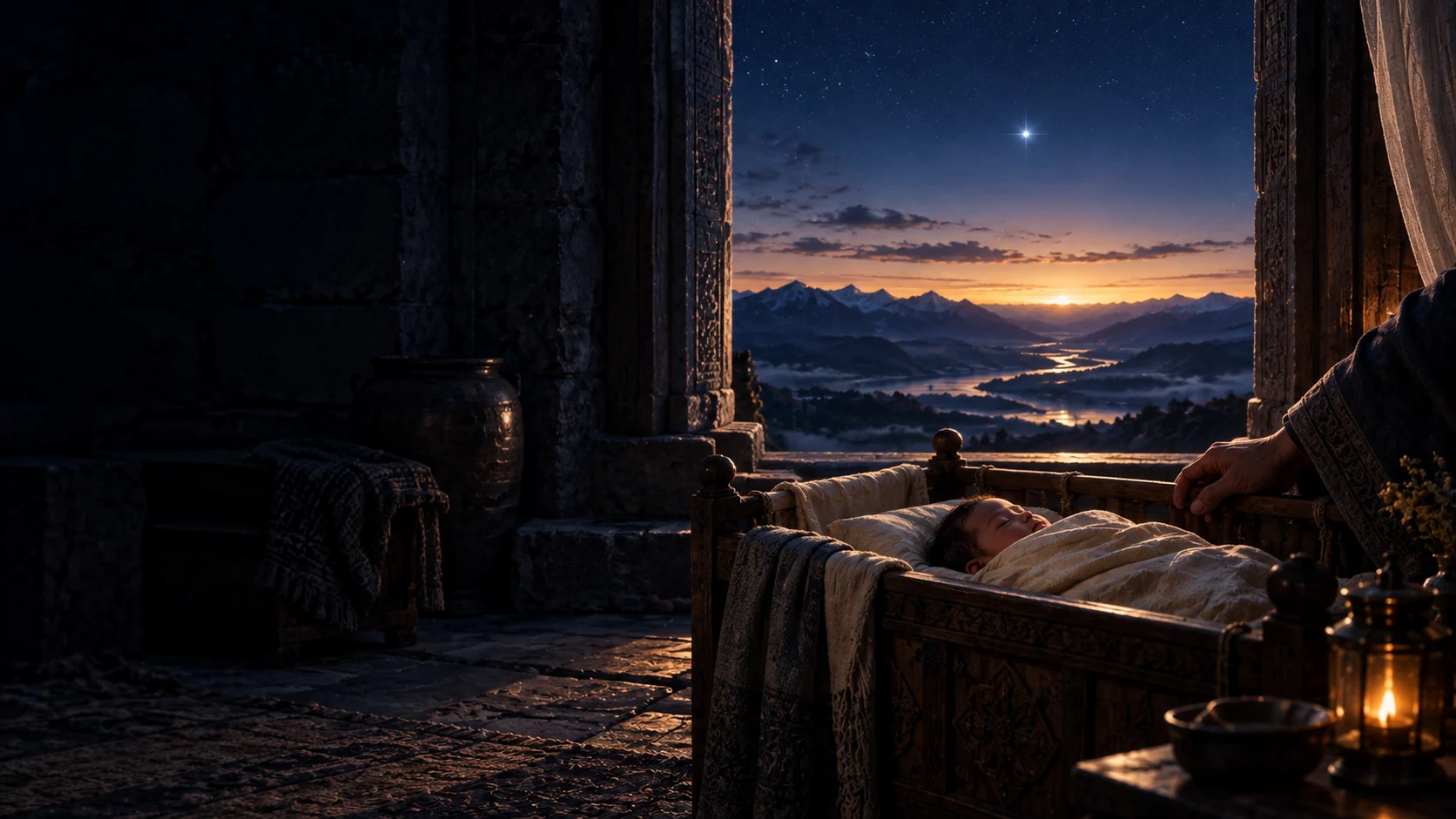
One moment becomes yours.
A birth has a time and a place. Together, they anchor a personal chart.
The horizon shifts as the earth turns. The chart simply records a particular view of the sky from a specific place. It is a beginning, not a script for every step that follows.

The chart is still. Life moves.
Dashas offer a way to read the changing chapters of time.
Some themes arrive early; others take years to reveal themselves. A reading asks which threads are active now, what might be ripening, and where patience or deliberate action truly matters.

Bring a question from your life.
Work, a relationship, a turning point, or a direction you cannot quite name.
An ancient method becomes useful when it meets the life being lived today. A genuine question keeps the reading grounded: it turns symbols into a conversation about choices, timing, and what you already know deep down.


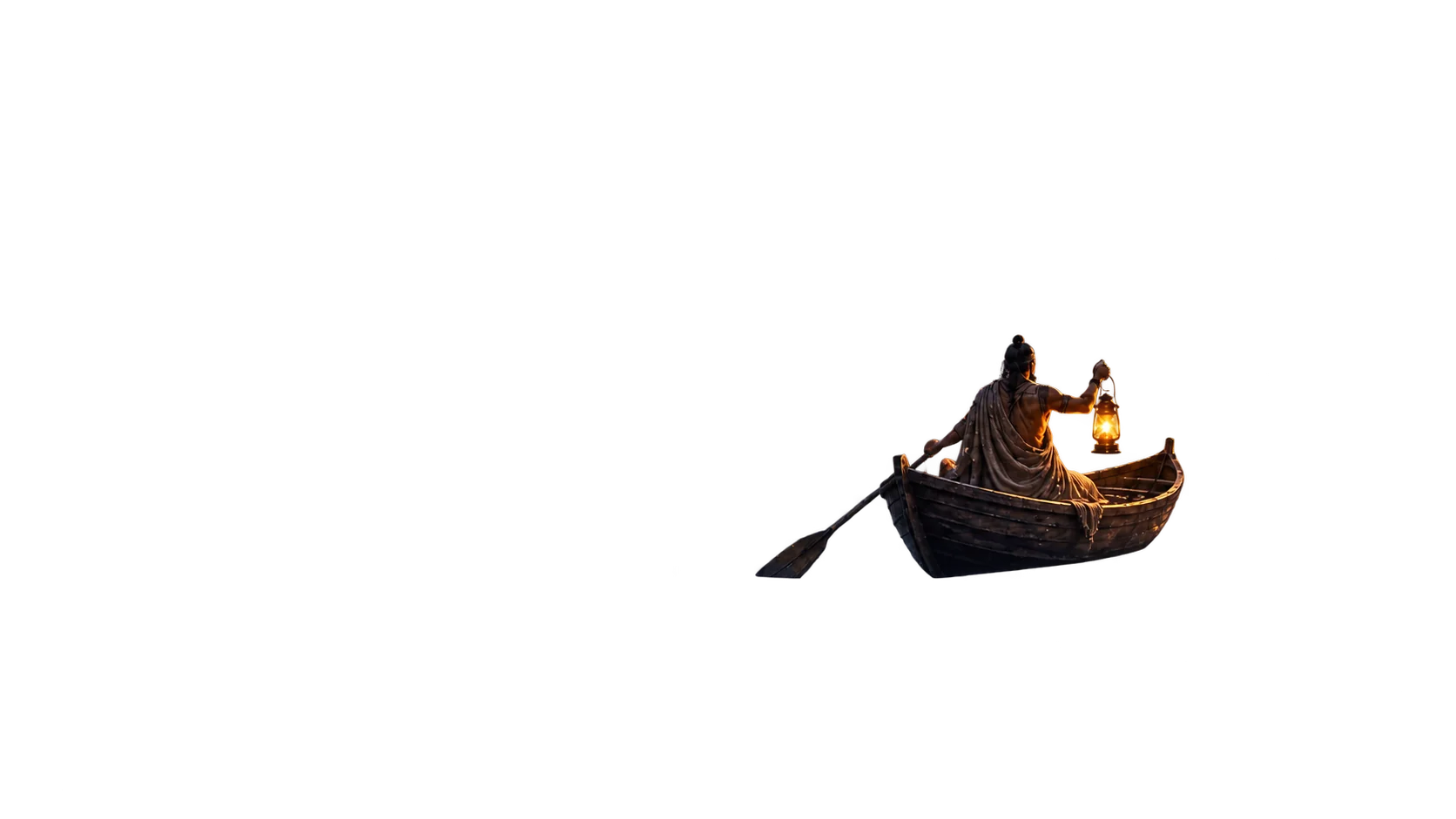
The weather is not the voyage.
A chart may describe the wind, but your hands still hold the wheel.
There are times to set out, times to wait, and times to change direction. Jyotish can make the conditions easier to navigate; but it does not take the living of your life away from you.
Two ways of locating the sky.
Western astrology and Jyotish are broad traditions with diverse schools. Their most familiar modern forms often begin with different reference points and perspectives.
Western
- Commonly uses the tropical zodiac
- Often explores personality and psychological patterns
- Methods vary by practitioner and school
Jyotish
- Commonly uses the sidereal zodiac
- Reads the Moon, nakshatras, and grahas in relation to one another
- Uses dashas as a framework for timing
Begin with a real question.
Cast your chart first. Meet its language slowly. When a question feels ready, choose a reading that can hold it.